
HOW DO YOU PICK THE BEST PUP?
By Neil Brown
Is there an answer to this age-old question, I probably think not but it is a question that is often asked particularly by newcomers. While many in our sport have a theory and a method they use, it’s a bit like breeding the unknown and that element of luck surely play their part.
We have consistently heard the stories of the superstar that got left behind, nobody wanted Brett Lee for various reasons and he was sold at a cheaper price much older than his litter brothers and sisters. Reg Crawford whelped a litter from Fearless Payout for her Brisbane owner Gary Cottrell. They sold all but one brindle pup, which nobody wanted. Crawford paid Cottrell $250 for the pup that was left, it turned out to be the brilliant Pretty Fearless.
We know that the likes of Spread Eagle was selected at random by owner Peter Campbell who had never picked a pup before. Malawi’s Prince was a nice blue pup that Ollie Maxwell suggested to novice owner Matthew Dewan would be good choice. Eric Tedford was going to sell Flying Amy but Ron Ball convinced him not to and bought a half share to keep the pup at his property.
Norm McCullagh told me he had first pick of the Roy Trease x Irish Temptress litter at ten weeks old. The litter of nine pups were all fawn and Norm selected Bold Trease in his words “ for no apparent reason, lucky I guess but they all looked the same fawn dogs and bitches, it was no more than pure luck.”
Of more recent times Wagga couple Max and Carole Sanbrook made a journey to the Heathcote property of veteran greyhound breeder Les Slattery. The purpose of the trip was to select a pup for their son and his mates, all members of the local football club, in the hope of some race success. Having never selected a pup before they duly picked one out. However so taken by the litter of youngsters by Head Honcho from Our Girl Olivia they bought one for themselves. Their tiny black pup was of course Carlisle Jack.
By the same token there have been some sound theories formed over the years. Veteran greyhound man of 60 years the late Ron Nestor told me that he was told stories that early coursing enthusiasts explained to him of a method that involved holding pups by the tail. This sounded bizarre to me, until Ron produced a book published in 1899 that explained how to do this. The following is an extract from page 82 of the “The Badminton Library” book on coursing by author Harding Cox Crichardson.
82 COURSING
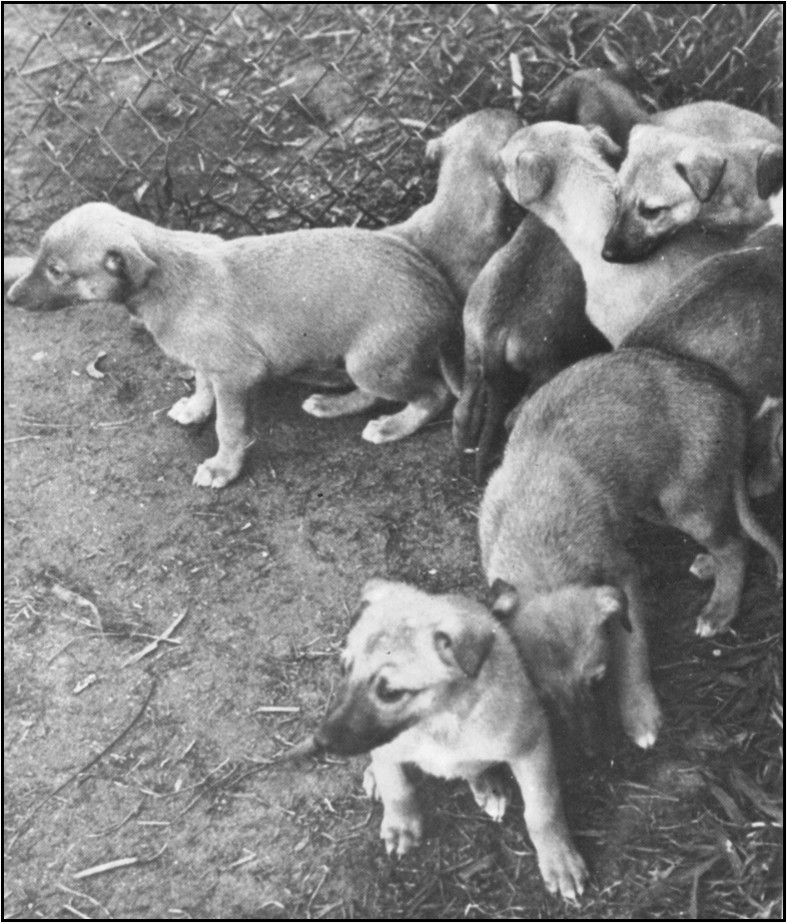
Experienced greyhound breeders have various methods of selecting choice whelps, and they are guided by general appearance; but the tiro may easily be deceived. ‘Stonehenge’ gives a hint, which is certainly worth attention. Let the puppies remain with their dam for a week, then hold each up by the tail; the best ones will bring their legs well over their head, and you can see which possess length, and the promise of good ribs. And here we would impress on the reader that a well‑chosen pup of this age, even if he subsequently deteriorates, will eventually assert his superiority; and however much a grand‑looking puppy goes off, he should never be despaired of until he has arrived at full maturity, unless, of course, he has been disabled by accident, or has become ‘chink‑backed’-an axiom that applies not only to greyhounds, but to foxhounds, and, indeed, to all members of the canine race.
Another method of selection that I once read about in an old English Coursing annual was that of a Mr. Fryson, who kept one of the largest greyhound kennels in England in the 1880’s and was a very successful breeder and trainer, winning many classic events with his dogs.
Mr. Fryson’s method was a very practical one. After separating the pups from the dam after weaning, he would house them in a kennel with a two-part door (similar to a stable door). The lower portion of the door was always kept closed and the upper portion left open. As the pups grew bigger and began to scamper about Mr. Fryson would start selecting his favourites.
His practice was to encourage the pups to jump over the lower portion of the door to take their exercise and meals, by whistling and calling at them.
The first pup to make it over the door would be Mr. Fryson’s selection as he reasoned that the pup had shown more courage, cleverness and strength of back than the rest of the pups.
Another interesting story I read surrounded the legendary Sam Bladon, the great old coursing trainer of the early 1900’s who trained no less than ten Waterloo Cup winners. Bladon was an uncanny judge at picking the best pup from a litter when only a few days old.
What his secret was, was never told, but one notable feature in Bladon’s success was the fact that he rarely ran more than one dog from each litter, which he bred.
He was never known to be wrong in his choice, and a remarkable thing, of the puppies which he either sold or gave as presents to his close friends (which were few) and which were carefully reared and trained by their new owners, none ever showed form anything like the litter brother or sister that Bladon kept for himself.
It was said that Bladon’s uncanny skill was a confidence told to him by a famous Coursing authority in England on the understanding that he would never divulge it to anyone else. Whether this story was true or not, the fact remains that Bladon took his secret to his grave.
Legendry owner-trainer and breeder the late Rod Deakin made no bones about the fact he could consistently pick the best pup in a litter. The fact was there was indeed over whelming evidence that Deakin over a long period years did just what he said he could do, pick the best. I had the utmost respect for Deakin a man with an extraordinary record in all forms of the sport. I was lucky enough on a number of occasions to interview Deakin on his time in greyhound racing and was always fascinated by his knowledge, frankness and forthright approach to an industry he’d been a leader in for over three decades. In Rod Deakin’s exact words the following is how he explained his theory and “secret” tip on finding the best pup in a litter.
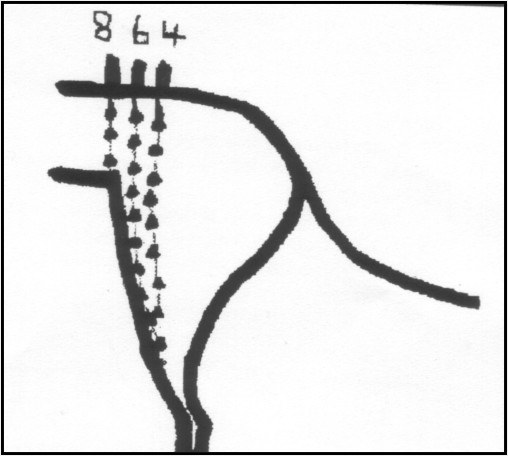
“Think the puppy you are about to buy is a rear-engined racing car. The engine that propels a greyhound is not in the front; it is also in the rear. The car, which beats the rest, has an 8-cylinder motor, a 6 cylinder motor car will finish second and a 4-cylinder car will be further back.
Using this as a guide you pick a puppy with an 8-cylinder motor to beat the 6 cylinder and the 4 cylinder one. There is only one spot on a puppy I look for in choosing which one I believe to be the 8-cylinder puppy of the litter.
The further forward the hip bones from the butt of the tail will give you
the best of that litter. The longer and straighter the distance of the body
between these two points gives the dog a wider back leg which enables him to
generate more power than the rest”
Many of the other methods that have been practiced over the years include the colour theory, the first-born, the first pup to open its eyes and the first pup to suckle the bitch.
While some will chose the pup with large eyes, full of life and expression or the largest pup whelped in the litter. Others simply go into a yard take off their woollen cardigan and select the first pup that shows interest in the object when it is dragged along the ground. This method was the way in which legendary Irish stud master Richie O’Reagan selected a Sobbing Sal pup on a visit to Australia in December 2001. He then paid $10,000 for the youngster by Just the Best.
Whatever way you choose to select your next champion, I trust the contents of this article can be of some assistance. My suggestion for what it’s worth, is the method I used when I selected an Exceptional x Black Dawnise pup a couple of months ago. I quite simple kept my fingers crossed for luck.